
Multi-Activation Bypass Valve Industry Pain Points & Core Functionality

Introduction:
When drilling directional wells, horizontal wells, and deep, complex formations, drilling rigs often find themselves caught in a "catch-22." On one hand, frequent lost circulation requires pumping large-particle lost circulation materials (LCM). On the other hand, high-value Measurement While Drilling (MWD) / Logging While Drilling (LWD) tools and downhole mud motors are highly vulnerable to erosion from high-concentration, highly abrasive fluids. Today, we bring you Tianhe Oilfield's hardcore solution—the Multi-Activation Bypass Valve—to see how it breaks this industry deadlock.
1. Four Major Lost Circulation Challenges in Drilling Operations
During drilling operations in complex formations, different types of lost circulation pose a direct threat to drilling safety and progress:
Seepage Losses (Porous Formations): These typically occur in highly permeable sandstones, gravel beds, unconsolidated sand layers, and loose sand formations. The loss rate is generally between 5 to 20 cubic meters per hour and rarely exceeds 30. Characteristics include a slow rate of loss with no flowing or total loss, and the loss worsens as drilling fluid density increases; total loss of returns rarely occurs.
Natural Fracture Losses: These occur in formations where natural, structural, or stress fractures are highly developed, such as limestones, dolomites, marls, and tight sandstones. Typical loss rates range from 20 to 100 cubic meters. Characteristics include a sudden onset and stable loss rate; the more developed the fractures, the more severe the loss, potentially leading to partial loss of returns.
2. The "Heavy Price" of Traditional Methods
Before specialized bypass circulation tools were introduced, the industry relied primarily on the following methods to address lost circulation, all of which come with severe consequences:
Pumping Blindly Through the BHA (Tool Damage): Keeping the mud motor, MWD, and other directional bottom hole assembly (BHA) components in the drill string while pumping viscous media such as cement, polymer gels, or fibrous materials directly through the system. The consequences often include seized mud motors, elastomer/stator debonding, or completely plugged MWD pulsers and drill bit nozzles.
Tripping Out to Pump LCM (Extremely Time-Consuming): As the historical standard operating procedure, this requires tripping out the entire drill string, filling the open wellbore with lost circulation material (LCM) from the surface, and waiting on cement/gel (WOC) for 12 to 24 hours. The round-trip time combined with curing time typically spans 12 to 36 hours—even longer in horizontal and extended-reach wells (ERW). A single operation can consume 1 to 3 days, driving up costs exponentially and significantly increasing the risk of blowouts or wellbore collapse while the hole is left open.
Squeezing Cement Plugs via Drill Pipe (Protracted Rig Time): In extreme scenarios such as caverns or underground rivers, drill pipe is run down close to the thief zone to spot and squeeze a cement plug. However, the cement still passes through the BHA components, carrying an extremely high risk of plugging the downhole tools, requiring extensive WOC time, and severely extending the overall drilling schedule.
3. Challenges in Cutting Bed Removal within Horizontal Wells
Beyond lost circulation, in the long horizontal sections of directional and horizontal wells, drill cuttings easily settle on the low side of the wellbore to form a "cuttings bed." This results in tight spots during tripping and severe drag/torque issues. Standard hole cleaning is constrained by the restricted flow areas of the downhole BHA tools and drill bit nozzles; conventional flow rates are limited, leading to insufficient annular velocity, which in turn causes frequent stuck pipe or pump pressure spikes. Statistics show that traditional non-productive time (NPT) for tripping, swapping tools, and circulating to clean the hole accounts for 30% to 50% of the entire drilling cycle. This highlights the urgent need for a tool that can be cycled open and closed repeatedly without tripping out of the hole.
Teaser: Faced with these thorny industry dilemmas, how exactly does Tianhe's Multi-Activation Bypass Valve work its magic downhole to achieve multiple open-and-close cycles without tripping? In our next issue, we will take a deep dive into its core mechanical design and operating principles.
 Congratulations! Our Downhole Mud Motors and Stabilizers have been successfully approved as qualified products by Abu Dhabi National Oil Company (ADNOC)
  Join Tianhe Oil at Xinjiang Petroleum & Chemical Expo 2026
  What value does the Multi-Activation Bypass Valve deliver?
  How does a multi-activation bypass valve work?
  An In-Depth Breakdown of Cased-Hole Sidetracking: Racing Through the Steel Wall
  Downhole "Surgery": How Casing Side-Tracking Breathes New Life into Damaged Wells
  New application example of high speed and high power screw drilling tool of TRW Petroleum
  Tianhe directional well product practical case
  The company passed the review of QES system certification
  In 2021, the first batch of high-tech enterprises were approved
 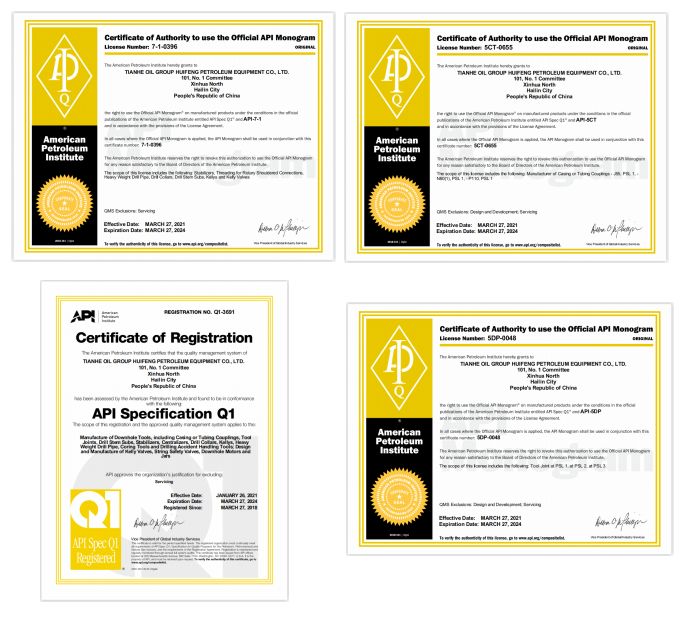 API external audit